
Bacopa And The Twelve-Week Rule: Why Every Trial In The Review Ran Three Months
Why every trial in the systematic review ran three months, and what that means for a pack.
CogniHoney Official Website Reference Guides
Two long guides sit here. The Memory Supplement Guide explains how these products are regulated and what the research on bacopa, ginkgo, lutein and the B vitamins found, including how long the trials ran. Choosing A Memory Supplement turns that into a ten-point checklist and scores CogniHoney against it, lost points included.
Five shorter notes from the blog follow, each on one question the named list raises.
Read the first to understand the category. Use the second when you are deciding.
How memory supplements are regulated, six ingredient families, what the research on bacopa, ginkgo, lutein, alpha-GPC and the B vitamins found, how long the trials ran, who took part, and the interactions to check.
A ten-point checklist in the order that saves the most time, the cost-per-day arithmetic, six warning signs, a fair-test plan, and CogniHoney scored against it, lost points included.
Each takes one question the named list raises and answers it with the research.
Why every trial in the systematic review ran three months, and what that means for a pack.
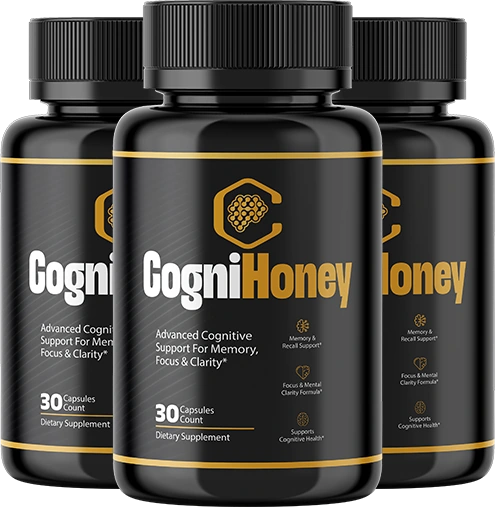
Reading a capsule count against a two-capsule serving, and the cost per day it produces.
What a standardisation figure beside bacopa, lutein, zeaxanthin and green tea can tell you.

Reading a product name against its ingredient list, with the honey jar in the photograph.
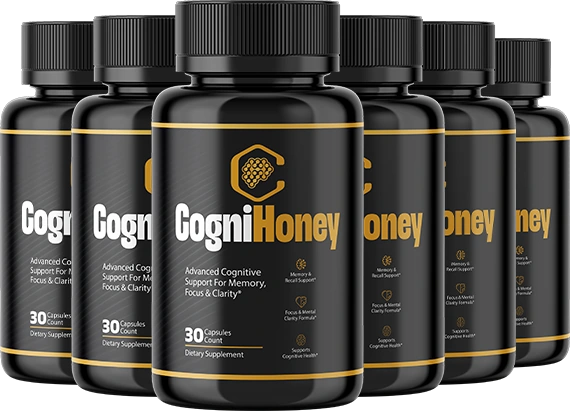
What the Cochrane reviews found, and who should check their B12 first.
Four pages, about forty minutes, and you will know more about this product than most people who sell it.
Start with the Memory Supplement Guide for the rules and the research.
Then read the supplement facts page with the guide open.
Score what you have read with the checklist.
Finish with the safety page if you take any medicine.
Start from your question rather than from the top of a guide.
| Question | Where it is answered |
|---|---|
| Are memory supplements checked before they are sold? | Memory Supplement Guide, on how the category is regulated |
| How long did the bacopa trials run? | Memory Supplement Guide, and the note on the twelve-week rule |
| Does ginkgo matter if I take a blood thinner? | Memory Supplement Guide, interactions, and the safety page |
| Why would an eye carotenoid be in a memory formula? | Memory Supplement Guide, on lutein and zeaxanthin |
| Do B6 and B12 help memory? | B6, B12 And Memory, on the two Cochrane reviews |
| How do I compare packs fairly? | Choosing A Memory Supplement, cost per day, and Fifteen Days A Bottle |
| What does a percentage beside an ingredient mean? | 20%, 5%, 50%: The Percentages |
| Which warning signs should make me walk away? | Choosing A Memory Supplement, the six warning signs |
Each answer links to the section or note that covers it in full, with its sources.
Plain definitions, so the research tables read the way they were written.
A label claim about supporting a normal body function, such as memory. Not a disease claim.
An extract made to contain a set percentage of a marker compound, so batches match.
The most of a nutrient a day that is unlikely to cause harm, such as 100 mg for vitamin B6.
A study that finds and summarises every trial on a question, using rules set in advance.
A systematic review that pools the trials’ numbers into one estimate.
Following a large group over time. It finds associations, not proof of cause.
A published account of one patient. A signal, never a rate.
A trial in which some people take a dummy, so expectation can be separated from effect.
Knowing the edges of a guide is part of reading it well.
Forty sources sit behind these pages. This is how each one earned its place.
Every PubMed citation was fetched from the NCBI record itself, and the title, authors, journal, year and pages were copied from it rather than typed from memory.
Every record was checked against the retraction and expression-of-concern filters. Where an erratum exists, as it does for a 2001 bacopa trial’s dosage, the corrected detail is simply not quoted.
Fact sheets from the NIH Office of Dietary Supplements, NCCIH, the FDA, the FTC, the National Institute on Aging, MedlinePlus and EFSA were opened in a browser and each quoted figure found on the page.
Every finding is given with the people it was found in, and every amount with the study that used it. Neither is ever moved onto a product label.
They are written by the desk that sells it, which is why the checklist guide scores CogniHoney and shows where it loses points. The research sections name no product and would read the same for any memory supplement.
The Memory Supplement Guide, for the rules and the research. The checklist makes more sense once you know how long the trials ran and who took part.
No. They describe the published research on common ingredients. Whether a supplement suits you, especially alongside prescription medicine, is a question for your prescriber.
Whenever a cited source changes or a reader reports a problem, and the review date at the foot of each page moves forward. Last reviewed September 2026.
Four things a sceptical reader can check in ten minutes:
We earn when you buy. Cogniqhoney is the USA Authorized CogniHoney Retailer named at the top of this page and this website makes money on orders placed through it. That is why the safety notes, the three-star review and the plain statement that CogniHoney is not a treatment for anything are on the page: they are where our interest and yours pull apart. Order support on +1 (302) 200-3480 handles tracking, changes and refunds and is never a way to place an order.
Two capsules a day, fifteen days a bottle, and 60 days from purchase to ask for a refund.
$49 to $79 a bottle across the 2, 3 and 6 bottle packs · 60 days from purchase to ask for a refund
Lot COG-26/CO-2321 · ships from the US with tracking · order support +1 (302) 200-3480