CogniHoney Official Website Blog Why CogniHoney Contains Choline
Why CogniHoney Contains Choline: The Research Behind AGP Choline
AGP choline is the third of CogniHoney’s eleven named ingredients. A separate note on this blog already untangles the name itself — AGP choline, alpha-GPC and choline alfoscerate are three names for the same compound. This one goes further: why choline is on a memory-supplement label at all, and what the clinical trials of that compound actually measured.
- Choline feeds acetylcholine. It is the raw material the body uses to make the neurotransmitter most tied to memory and attention, alongside membrane phospholipids and the methyl donor SAMe.
- AGP choline is alpha-GPC. Among choline sources, it delivers choline efficiently and is the one most often chosen for cognition research.
- Two clinical trials, two different populations. A 2003 trial ran 400 mg three times a day for 180 days in adults with mild-to-moderate Alzheimer’s dementia; a 2024 trial ran 600 mg a day for 12 weeks in adults with amnestic mild cognitive impairment. Neither trial enrolled healthy adults taking a daily supplement.
- The label does not print a milligram amount. AGP choline is named without a percentage or a per-serving dose, so none of this research can be matched to an exact amount in the capsule.
The short answer: what choline does, and why it is here
Choline is an essential nutrient, meaning the body cannot make enough of it on its own and needs some from the diet. One of its jobs is supplying the raw material for acetylcholine, a neurotransmitter used throughout the nervous system and especially tied to memory, attention and muscle control.[Blusztajn 2017] That single fact is the entire reason a choline compound shows up on a memory-supplement label: it is not a stimulant, a vitamin in the B-complex sense, or a plant extract, but a building block for one of the signaling chemicals the brain runs on.
CogniHoney supplies its choline as AGP choline, the label’s name for L-alpha-glycerylphosphorylcholine, usually shortened to alpha-GPC. It is one of several forms choline can be delivered in — others include choline bitartrate and citicoline — and it is the form most often selected for clinical research on cognition, which is the research this note works through.
Where AGP choline sits on the CogniHoney label
AGP choline is the third of eleven named ingredients in CogniHoney’s two-capsule daily serving, between cinnamon extract and bacopa monnieri. It is one of seven names on the list printed without a percentage — the other six are Himalayan pink salt, cinnamon extract, bilberry leaf powder, vitamin B6, ginkgo biloba powder and vitamin B12. Only bacopa monnieri (20%), lutein (5%), zeaxanthin (5%) and green tea extract (50%) carry a printed share, and a separate note on this blog explains what that percentage format does and does not disclose.
No milligram amount is printed for AGP choline on the front of the bottle. Amounts belong on the Supplement Facts panel that US labeling rules require, so the actual per-serving dose is on the panel on the bottle you receive, not on the marketing artwork. That is a meaningful gap to hold in mind while reading the trial doses further down this page, since none of them can be matched to CogniHoney’s own serving without that number.

Acetylcholine synthesis: why a memory label reaches for choline
A 2017 review by Blusztajn, Slack and Mellott at Boston University lays out choline’s roles in the nervous system: it is a precursor of membrane phospholipids such as phosphatidylcholine, of the neurotransmitter acetylcholine, and, via betaine, of the methyl donor S-adenosylmethionine.[Blusztajn 2017] In animal models cited by that review, higher choline intake during development improved later cognitive function and reduced markers of neuropathology linked to Alzheimer’s disease, epilepsy and other conditions; in adults, choline’s effect on phosphatidylcholine species containing certain fatty acids has also been associated with memory performance.
None of that is a claim that adding choline to an already sufficient diet improves memory in a healthy adult — the review is explicit that most of its strongest evidence comes from developmental and animal research. What it does establish, cleanly, is the mechanism a label-reader is really asking about when they see “choline” beside “memory”: choline is upstream of acetylcholine, and acetylcholine is downstream of a great deal of memory and attention research that predates any supplement industry.
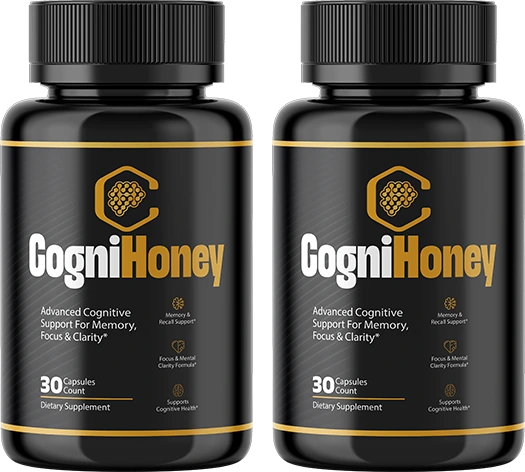
CogniHoney, on the official website
Two capsules a day, thirty to a bottle, eleven ingredients named on the list. Packs of 2, 3 or 6 bottles, and 60 days from purchase to ask for a refund.
Order CogniHoneyHow much choline adults need, and where a supplement source fits
The NIH Office of Dietary Supplements sets an Adequate Intake for choline at 550 mg a day for adult men and 425 mg a day for adult women, rising for pregnancy and lactation, and puts the tolerable upper limit for adults at 3,500 mg a day.[ODS] Most of that intake, in a typical US diet, comes from eggs, meat, fish and some vegetables rather than from a supplement. A choline compound in a supplement is one route toward that intake target, not the only one, and the fact sheet is a useful independent check on how a single ingredient fits into a much larger daily total.
This is also where the label gap matters again: without a printed milligram amount for AGP choline, there is no way to say from the label alone what share of that daily target a CogniHoney serving is contributing, or how it compares with the doses used in the trials below.
The ODS fact sheet also lists which foods carry the most choline: beef liver, eggs, fish, chicken, and some vegetables such as Brussels sprouts and broccoli, in that rough order. Anyone eating a typical mixed diet is likely already meeting a meaningful share of the Adequate Intake before any supplement is added, which is worth knowing before assuming a choline-containing capsule is filling a large gap rather than a small one.
What the alpha-GPC cognition trials actually found
Two randomized, placebo-controlled trials of alpha-GPC (choline alfoscerate) illustrate what the direct cognition research on this compound looks like.
The earlier trial, published in 2003, enrolled 261 adults with mild-to-moderate Alzheimer’s disease dementia, average age 72, across multiple centers. Participants received 400 mg of choline alfoscerate three times daily (1,200 mg a day) or a matching placebo capsule for 180 days. The group taking choline alfoscerate showed a statistically significant improvement on the ADAS-Cog cognitive scale at both 90 and 180 days compared with baseline, while the placebo group’s scores worsened over the same period.[De Jesus Moreno Moreno 2003]
The more recent trial, published in 2024, took a different population: 100 adults with amnestic mild cognitive impairment, a milder stage than dementia, across multiple South Korean centers. Participants took a 600 mg alpha-GPC soft capsule or a matching placebo daily for 12 weeks. The alpha-GPC group’s ADAS-cog score improved by 2.34 points more than the placebo group’s, a statistically significant difference, with no serious adverse events reported and no significant difference in adverse-event rates between groups.[Jeon 2024]
| Trial | Who was studied | Dose and duration | Main finding |
|---|---|---|---|
| De Jesus Moreno Moreno 2003 | 261 adults, mild-to-moderate Alzheimer’s dementia, average age 72 | 400 mg three times daily, 180 days | Significant ADAS-Cog improvement vs. placebo, which worsened |
| Jeon 2024 | 100 adults, amnestic mild cognitive impairment | 600 mg once daily, 12 weeks | ADAS-cog improved 2.34 points more than placebo; no serious adverse events |
Reading a dementia and MCI trial against a healthy-adult supplement
Both trials are genuine, peer-reviewed, placebo-controlled evidence that a specific choline compound, at a specific and disclosed dose, improved a cognitive scale in a specific clinical population over a specific number of weeks. That is real research, and it is why AGP choline is a defensible ingredient to research rather than an arbitrary one. It is also not the same claim as “a daily supplement improves memory in a healthy adult,” and the distance between the two claims is exactly the population difference in the table above.
Alzheimer’s dementia and amnestic mild cognitive impairment are diagnosed conditions with an underlying, ongoing loss of cholinergic neurons; supplementing the precursor to acetylcholine in that setting is targeting a specific, documented deficit. A healthy adult without that diagnosis is not in the same starting position, and a trial run in people with a diagnosed condition does not, by itself, predict what the same compound does in someone without one. Neither trial above enrolled healthy volunteers taking the compound as a daily wellness supplement, and neither trial tested CogniHoney as a finished product.
Questions this research does not answer for CogniHoney specifically
Three gaps sit between the trials above and the bottle on the shelf. First, dose: CogniHoney’s label does not print a milligram amount for AGP choline, so there is no way to compare its serving against the 1,200 mg or 600 mg used in the two trials. Second, population: both trials studied a diagnosed clinical population, not healthy adults taking a daily supplement. Third, product: neither trial tested CogniHoney itself, only the isolated compound alpha-GPC on its own, alongside ten other named ingredients that were not part of either trial’s design. All three gaps are normal for a multi-ingredient supplement built from ingredients that each have their own separate research base, and all three are reasons to treat the trials as evidence about the compound, not as evidence about the finished product.
A fourth, smaller gap is duration. The longer of the two trials ran 180 days; the shorter ran 12 weeks. Neither says anything about what a year or more of daily use looks like, which is the timeframe most supplement buyers actually care about. That is not a criticism unique to alpha-GPC — it is a limitation shared by most nutrition and supplement trials, which are expensive to run for longer than a few months, and it is worth keeping in mind for every ingredient on this label, not only this one.
CogniHoney is a dietary supplement, not a medicine, and nothing here is medical advice. The trials cited studied a diagnosed clinical population; this note describes that research, it does not claim the same result for a healthy adult taking a daily supplement. Anyone with a diagnosed cognitive condition should be assessed and treated by a clinician.
A short checklist for reading a choline-source claim
- Check which choline compound is named — alpha-GPC, citicoline and choline bitartrate are not interchangeable in the research.
- Look for a milligram amount on the Supplement Facts panel, and compare it with the trial doses if a comparison is being made.
- Note who the cited trial actually enrolled — a dementia or MCI trial is not evidence about a healthy adult, and vice versa.
- Check the NIH Office of Dietary Supplements fact sheet for the adult Adequate Intake and upper limit before assuming a supplement dose is small or large.
- Remember that research on an isolated compound is not research on a multi-ingredient finished product.
Sources cited in this article
- Blusztajn JK, Slack BE, Mellott TJ. Neuroprotective Actions of Dietary Choline. Nutrients. 2017;9(8):815. PMID 28788094. https://pubmed.ncbi.nlm.nih.gov/28788094/
- De Jesus Moreno Moreno M. Cognitive improvement in mild to moderate Alzheimer’s dementia after treatment with the acetylcholine precursor choline alfoscerate: a multicenter, double-blind, randomized, placebo-controlled trial. Clin Ther. 2003;25(1):178-93. PMID 12637119. https://pubmed.ncbi.nlm.nih.gov/12637119/
- Jeon J, Lee SY, Lee S, Han C, Park GD, Kim SJ, Chang JG, Kim WJ. Efficacy and safety of choline alphoscerate for amnestic mild cognitive impairment: a randomized double-blind placebo-controlled trial. BMC Geriatr. 2024;24(1):774. PMID 39300341. https://pubmed.ncbi.nlm.nih.gov/39300341/
- NIH Office of Dietary Supplements. Choline: Fact Sheet for Health Professionals. https://ods.od.nih.gov/factsheets/Choline-HealthProfessional/
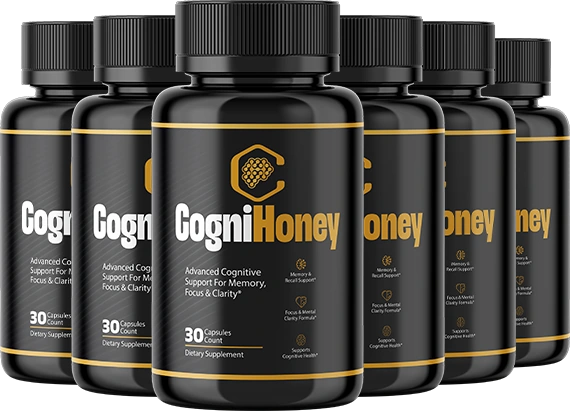
CogniHoney: eleven named ingredients, two capsules a day
Packs of 2, 3 or 6 bottles, and 60 days from purchase to ask for a refund.
$49 to $79 a bottle across the 2, 3 and 6 bottle packs · 60 days from purchase to ask for a refund
Lot COG-26/CO-2321 · ships from the US with tracking · order support +1 (302) 200-3480