
Bacopa And The Twelve-Week Rule: Why Every Trial In The Review Ran Three Months
Why every trial in the systematic review ran three months, what they found, and which pack covers the same length.
Five longer notes, each on one question a memory supplement label raises: why every bacopa trial ran twelve weeks, how a capsule count becomes days of supply, what the percentages on a list can tell you, whether there is honey in CogniHoney, and what two Cochrane reviews found for vitamins B6 and B12.
Each note cites its sources inline and links to the pages it bears on.
Each runs seven or eight minutes and cites its sources inline.
Why every trial in the systematic review ran three months, what they found, and which pack covers the same length.
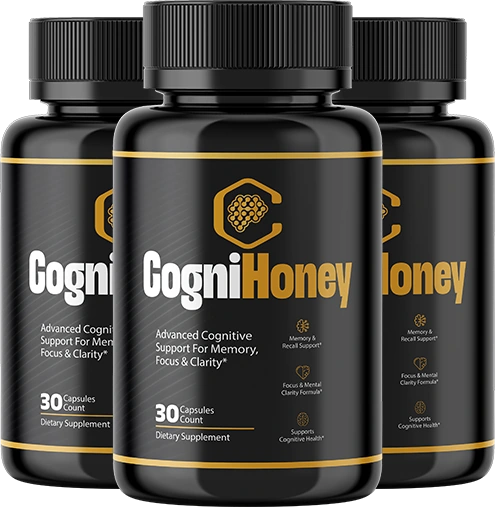
Thirty capsules at two a day is fifteen days. What that does to supply, cost per day and the guarantee.
Bacopa 20%, lutein and zeaxanthin 5%, green tea extract 50%: what a percentage can tell you, and what it needs.

The name, the mark and the photograph all point at honey. What the eleven-name list says, and how to read one against the other.
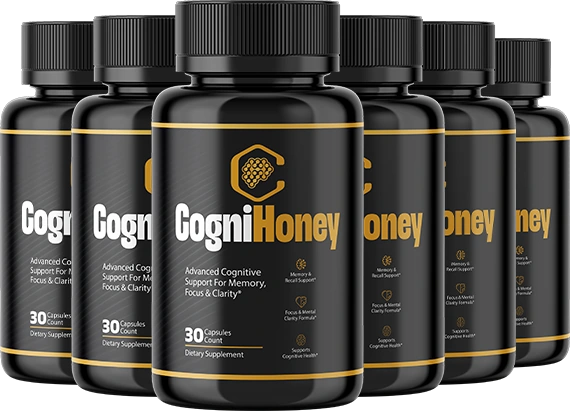
What the two Cochrane reviews found for memory, who is low in B12, and why metformin matters.
Six questions readers ask most, and where each is answered.
Bacopa And The Twelve-Week Rule: the length every trial in the review ran.
Fifteen Days A Bottle: the count, the serving and the cost per day.
20%, 5%, 50%: standardisation, and what it needs.
Is There Honey In CogniHoney?: a name read against its list.
B6, B12 And Memory: what the Cochrane reviews found.
The Memory Supplement Guide and the checklist go further.
By the CogniHoney Team. Six habits every note follows, whatever its topic.
Each note starts from a question the named list raises, not from a keyword.
Every study is cited from its own record, with the people it studied and how long it ran.
Every fact about CogniHoney is credited: the bottle front, the CogniHoney ingredient list and directions, the product photographs or the CogniHoney terms.
A milligram figure is always given with the trial that used it, never presented as what a capsule holds.
Each note sets its numbers side by side in one table, so the comparison is on the page, not in your head.
The last-updated line is the date the note was last checked. A correction moves it forward.
The notes stand alone, but the order you read them in can save time.
Start with Fifteen Days A Bottle for what a bottle holds and how long it lasts, then the percentages note for what the list itself says.
Read Bacopa And The Twelve-Week Rule first. Every trial in the review ran three months, and that length shapes which pack makes sense.
Read B6, B12 And Memory, which covers metformin and acid reducers, then the safety page for every published interaction.
Seven facts about one product. Every note is anchored to at least one of them.
| Fact | What it says | Note that works with it |
|---|---|---|
| Capsules a bottle | 30, printed on the bottle front | Fifteen Days A Bottle |
| Serving | Two capsules once a day with a full glass of water, about 30 to 60 minutes before the largest meal, as the label directs | Fifteen Days A Bottle |
| Named ingredients | 11 on the CogniHoney list, four of them with a percentage | The percentages note |
| Percentages | Bacopa monnieri 20%, lutein 5%, zeaxanthin 5%, green tea extract 50% | The percentages note |
| Bacopa monnieri | Listed at 20%, the herb the twelve-week trials tested | The twelve-week rule |
| Vitamins B6 and B12 | Two of the eleven names | B6, B12 And Memory |
| The name | CogniHoney, with a honeycomb mark on the label | The honey question |
From the bottle front, the CogniHoney ingredient list and directions, and the product photographs. Where a note quotes research, the study is named beside the figure.
Knowing a source’s limits is part of reading it well.
Six kinds of source, in the order a note reaches for them.
Where one exists, a note starts from a review of every trial rather than one study: the 2012 systematic review of bacopa, the 2014 meta-analysis of nine bacopa trials and a 2017 systematic review of green tea and cognition.
The Cochrane review of vitamin B6 and its counterpart for vitamin B12 anchor the B-vitamin note, read for the people they enrolled.
The NIH Office of Dietary Supplements for upper limits and interactions, and NCCIH for what is known about supplements for cognitive function.
The FDA on label claims sets what a structure/function claim may say, which is why the notes keep to memory and recall support.
The USP review of green tea extract and the liver and EFSA’s assessment of green tea catechins cover the safety side of one ingredient.
Trials such as Stough 2001 in healthy adults and Calabrese 2008 in adults over 65 are cited with the population they studied, never stretched beyond it.
The CogniHoney Team, the editorial desk behind this website. No note carries an invented author: the byline is the desk, and the about page says who that is and how it is paid.
They are written by the desk that sells CogniHoney, which earns when an order is placed. That is why each note names its sources inline, so a figure can be checked without taking the desk’s word for it.
Whenever a cited source changes or a reader reports a problem. The last-updated line under each title is the date it was last checked.
No. Each note describes research on an ingredient in the people it was run in, and research on an ingredient is not research on the capsule. What CogniHoney contains, and how to take it, is set out on the supplement facts page, and the label on the bottle you receive has the final word.
Because a trial in adults over 65 says little about a thirty-year-old, and a trial in people with a diagnosis says little about healthy adults. Naming the population is the quickest way to see how far a finding can travel.
At the foot of each note, numbered, and every one is also linked inline where it is used. The Memory Supplement Guide carries the wider library.
Two capsules a day, fifteen days a bottle, and 60 days from purchase to ask for a refund.
$49 to $79 a bottle across the 2, 3 and 6 bottle packs · 60 days from purchase to ask for a refund
Lot COG-26/CO-2321 · ships from the US with tracking · order support +1 (302) 200-3480